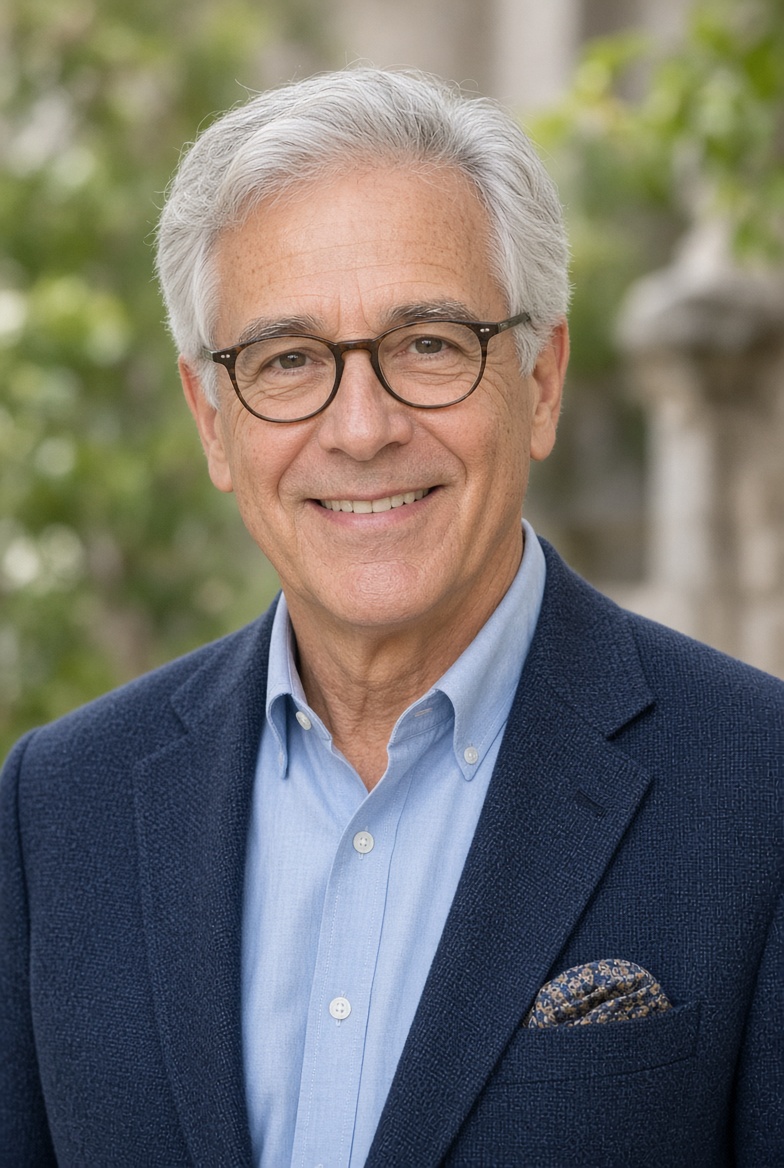
Thirty-six years in Ohio education. Agricultural educator. FFA coach. Lifelong learner. Exploring what works in vocational education, purposeful pathways, and life after the classroom.
Learn More
I spent 36 years in education — seven as a high school agriculture teacher and twenty-nine with the Ohio Department of Education, the last five as a Senior Executive Director.
I taught thousands of students and coached more than 200 Ohio FFA state officers. I visited hundreds of high schools and career centers, delivered hundreds of presentations, and helped shape career-technical education policy at the state level. I still consider myself a teacher and a learner.
After retiring from the Department at the end of 2018, I served as Executive Director of AgriCorps, working to expand school-based agricultural education in sub-Saharan Africa. Today I continue to write, think, and ride — mostly on a tandem bicycle with my wife, Andrea.
Seven years teaching secondary agriculture. The foundation of everything that followed. Direct work with students, FFA chapters, and the daily realities of vocational education.
29 years in various roles, culminating as Senior Executive Director for Student Support and Education Options. Focused on career-technical education, industry credentials, work-based learning, and student success pathways.
Coached more than 200 Ohio FFA state officers. Deep involvement in the premier student organization for agricultural education and leadership development.
Executive Director following retirement. Supported school-based agricultural education programs in Ghana, Liberia, Kenya, and beyond — using proven U.S. models to address youth development and food security in Africa.
A few of the ideas that have shaped my thinking about education, especially career and technical education.
Published December 2018, upon retirement from the Ohio Department of Education.
A list of observations about redesigning schools for student success — not just graduation. Topics include transitioning students to something rather than out of high school, blurring academic and technical content, personalized learning, industry credentials, work-based learning, and the importance of knowing every student’s career aspirations.
Charles Prosser’s 1920s theorems remain the foundational philosophy of vocational education in the United States. They emphasize realistic training environments, real tools and processes, and direct preparation for the workplace.
I’m currently working on a revision that incorporates modern research, contemporary language, and current realities in career and technical education — while preserving the enduring wisdom of the original theorems.
Throughout my career I advocated for earlier career exploration (starting by grade 7), integrated coursework, industry-recognized credentials, work-based learning, and post-graduation counseling. Graduation rates matter far less than what students successfully transition into after high school.
Andrea and I ride a lot — typically 9,000–11,000 miles a year on our Calfee gravel tandem and singles. Road and gravel. We ride for the joy of it, the conversation, and the miles. Looking forward to more year-round riding as we plan our next chapter in Tennessee.
Regular study of the ESV Bible. Time with family. Cooking (including the occasional Traeger project). Planning a move to the Chattanooga area for milder winters, safer cycling, and a community that fits. Seasonal time in Florida.
I don’t maintain an active blog, but you can find me in a few places.